


SMSU Faculty Help Lead Statewide Winter Science Initiative
Published Tuesday, October 20, 2026
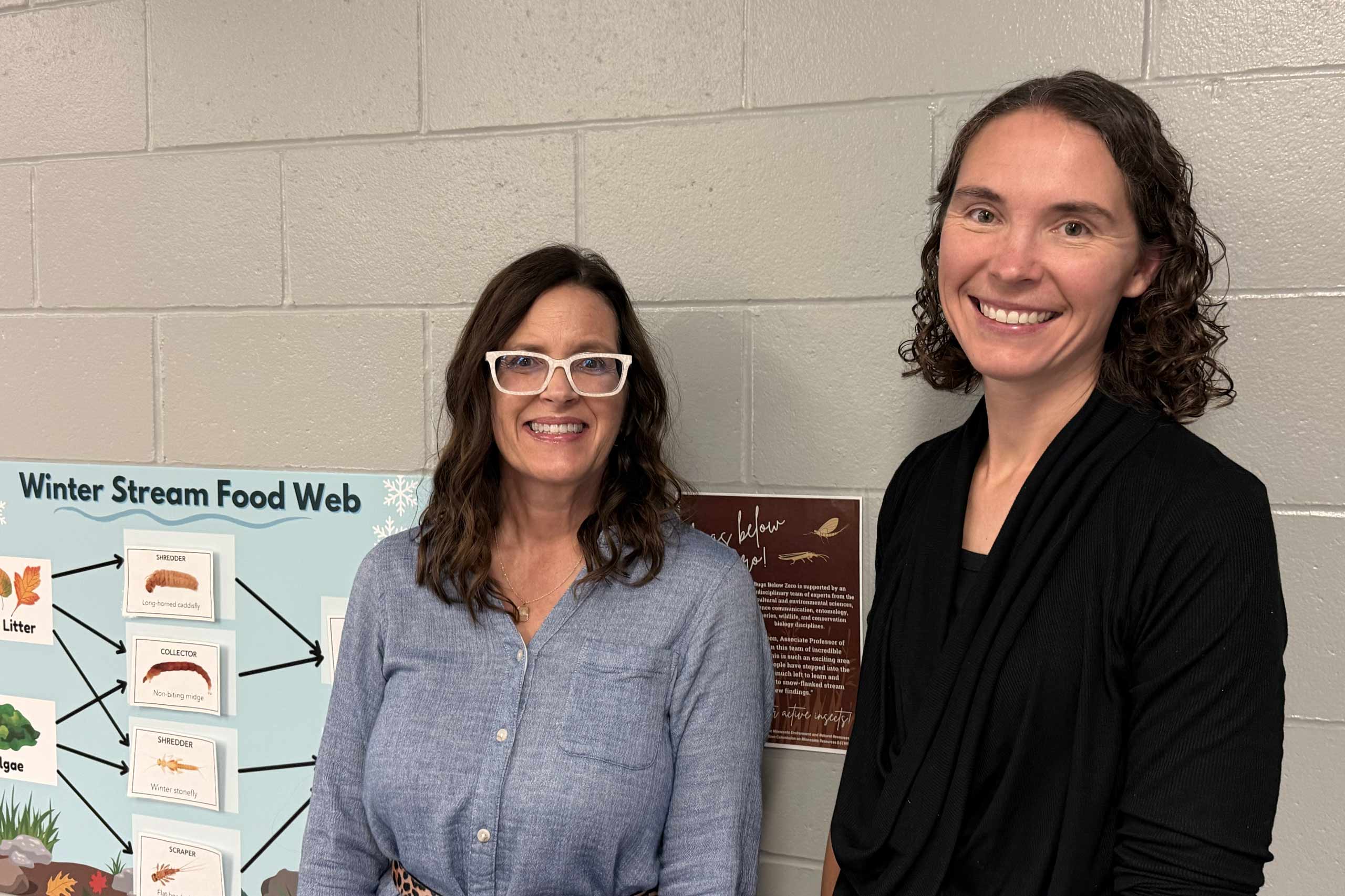
Dr. Kandy Noles Stevens and Dr. Alyssa Anderson
A unique program exploring Minnesota's winter insects and stream ecosystems is set to expand statewide, thanks to a major grant award that will bring new research opportunities, classroom resources, and community engagement initiatives to Southwest Minnesota State University.
Dr. Alyssa Anderson, professor of biology at SMSU, and Dr. Kandy Noles Stevens, professor of education, are part of a collaborative team whose proposal, "Bugs Below Zero: Engaging Communities with Winter Science," has been recommended for funding through Minnesota's Environment and Natural Resources Trust Fund. The proposal was one of 116 selected from 434 applications submitted to the Legislative-Citizen Commission on Minnesota Resources (LCCMR).If approved by the 2027 Legislature and signed into law by the Governor, the project would begin as early as July 2027. The University of Minnesota will serve as the lead institution, with SMSU receiving nearly $169,000 of the project's approximately $404,000 award.
The funding will support undergraduate student researchers, graduate assistant positions, outreach activities, educational programming, travel, and field supplies.
"This is really exciting because it creates opportunities for both science and education students," Anderson said. "Students will be involved in outreach, teaching, research, and collecting field data during the winter months. They'll be helping answer questions about Minnesota's winter-active insects while also building connections with communities."
The Bugs Below Zero program introduces participants to insects that remain active during Minnesota winters and highlights their critical role in stream food webs and aquatic ecosystems. Through hands-on activities, citizen science, and outdoor exploration, participants learn how insects, groundwater, stream health, weather, and fish populations are interconnected.
For Stevens, the project represents an opportunity to connect scientific discovery with education and to foster curiosity among young learners.
"One of the things we don't always do well in K-12 education is foster curiosity," Stevens said. "This experience helps people realize there's a whole world happening right there in the snow. Once students start noticing it, they begin asking deeper questions about the natural world around them."
The expanded program will feature community events, educator workshops, classroom lessons aligned with Minnesota academic standards, and field-based learning experiences focused on winter stream ecology.
A significant component of the project centers on what Stevens describes as "participatory science," engaging community members directly in the scientific process.
"Families, classrooms, community groups, outdoor enthusiasts, everyone can participate," Stevens said. "You don't need expensive equipment or highly specialized training. People can contribute meaningful observations and data while learning more about the environment where they live."
The project's statewide outreach efforts will include partnerships with Eagle Bluff Environmental Learning Center, River Bend Nature Center, and the Bell Museum. Anderson and Stevens also pushed to ensure Southwest Minnesota communities have a prominent role in the initiative.
"We were very adamant that this couldn't be entirely metro-focused," Stevens said. "Schools in Southwest Minnesota want these kinds of experiences, and students need opportunities that are accessible and close to home."
The grant also creates pathways for students interested in careers in science, education, environmental stewardship, and outdoor learning. Undergraduate students from a variety of academic disciplines, not just biology, will be encouraged to participate.
"Sometimes education students might not be the first people you think of for a project like this," Stevens said. "But someone studying elementary education with a passion for outdoor learning could be a perfect fit. That's one thing that's special about this project."
For Anderson, who has spent years studying winter stream ecosystems, one of the greatest rewards is seeing students discover life where they least expect it.
"Every time I take students to a stream in the winter, and they see life on the snow, they can't get enough of it," Anderson said. "It's fun to watch that excitement take hold."
The project builds on previous Bugs Below Zero efforts and responds to increasing demand from educators and communities seeking meaningful outdoor learning experiences during Minnesota's winter months.
By encouraging exploration, scientific inquiry, and environmental stewardship, the team hopes the program will inspire a new generation of researchers and lifelong learners.
"We want people to understand that there is so much happening outdoors, even in winter," Anderson said. "The more people learn about these ecosystems, the more connected they become to protecting Minnesota's natural resources."
The Environment and Natural Resources Trust Fund (ENRTF) is a permanent dedicated fund in the Minnesota state treasury that was established by 77% voter approval of a constitutional amendment in 1988. The amendment directs forty percent of the net proceeds of the Minnesota State Lottery into the ENRTF through the year 2050. Since 1991, approximately $1.3 billion from the ENRTF has been provided through the LCCMR to over 1,800 projects that protect and enhance Minnesota's environment and natural resources in every county of the state.
Related Articles


A Night of Poetry with Florence Dacey and Michael Bazzett on Oct. 22
Posted on 10-14-2026